lib.infer package
The infer Package contains objects and utilities for extracting faces from images and videos.
lib.infer.align Module
Handles face landmark detection plugins and runners
- class lib.infer.align.Align(plugin: str, re_feeds: int = 0, re_align: bool = False, normalization: Literal['none', 'clahe', 'hist', 'mean'] | None = None, filters: bool = False, compile_model: bool = False, config_file: str | None = None)
Responsible for handling align plugins within the extract pipeline
- Parameters:
plugin (str) – The plugin that this runner is to use
re_feeds (int) – Number of times to jitter detection bounding box and average the result. Default: 0
re_align (bool) –
Trueto re-align faces based on their first-pass results. Default:Falsenormalization (T.Literal['none', 'clahe', 'hist', 'mean'] | None) – The normalization to perform on aligner input images. Default:
None(no normalization)filters (bool) –
Trueto enable aligner filters to filter out faces. Default:Falsecompile_model (bool) –
Trueto compile any PyTorch modelsconfig_file (str | None) – Full path to a custom config file to load.
Nonefor default config
- output_info() None
Output the counts from the aligner filter
- Return type:
None
- post_process(batch: ExtractBatch) None
Post-process the landmark predictions from the model: average any re-feeds, scale back to original frame dimensions, apply any filters
- Parameters:
batch (ExtractBatch) – The incoming ExtractBatch to use for post-processing
- Return type:
None
- pre_process(batch: ExtractBatch) None
Obtain the adjusted square ROIs from the plugin based off the provided detection bounding boxes. Crop and size the input face images ready for inference from these ROIs
- Parameters:
batch (ExtractBatch) – The incoming ExtractBatch to use for pre-processing
- Return type:
None
- process(batch: ExtractBatch) None
Perform inference to get results from the aligner
- Parameters:
batch (ExtractBatch) – The incoming ExtractBatch to use for processing
- Return type:
None
- set_normalize_method(method: Literal['none', 'clahe', 'hist', 'mean'] | None) None
Update the normalization method with the given method
- Parameters:
method (Literal['none', 'clahe', 'hist', 'mean'] | None) – The normalization method to use
- Return type:
None
- class lib.infer.align.AlignedFilter(enabled: bool)
Applies filters to the output of the aligner
- Parameters:
enabled (bool) –
Trueto enable filters.Falseto disable
- __call__(batch: ExtractBatch) None
Apply aligner filters to the given batch
- Parameters:
batch (ExtractBatch) – The batch object to perform filtering on with the landmarks populated
- Return type:
None
- output_counts() None
If filters are enabled info log the number of faces filtered
- Return type:
None
- class lib.infer.align.Normalize(method: Literal['none', 'clahe', 'hist', 'mean'])
Handles the normalization of feed images prior to feeding the model
- Parameters:
method (T.Literal['none', 'clahe', 'hist', 'mean'])
- __call__(images: npt.NDArray[np.uint8]) npt.NDArray[np.uint8]
Perform the selected normalization method on the batch of model input images
- Parameters:
images (npt.NDArray[np.uint8]) – The batch of model input images to be normalized
- Return type:
The given images normalized by the chosen method, or the input batch if no method selected
- set_method(method: Literal['none', 'clahe', 'hist', 'mean'] | None) None
Update the normalization method with the given method
- Parameters:
method (Literal['none', 'clahe', 'hist', 'mean'] | None) – The normalization method to use
- Return type:
None
- class lib.infer.align.ReAlign(enabled: bool, plugin: ExtractPlugin, margin: float)
Handles re-aligning faces based on first-pass results
- Parameters:
enabled (bool) –
Trueif realigns are to be performedplugin (ExtractPlugin) – The plugin that will be processing re-aligns
margin (float) – The % amount that re-feed allows bounding box points to drift
- __call__(batch: ExtractBatch, landmarks: npt.NDArray[np.float32], iteration: int) None
Process the outputs from the plugin when re-aligning data
- Is called twice.
First pass: aligns the image based on the first pass landmarks, stores image patches
that next pass’ feed will be generated from and creates ROI boxes for this aligned patch - 2nd pass: Rotates detections back to frame alignment and updates the ROI to correctly scale and shift the alignments back to frame space downstream
- Parameters:
batch (ExtractBatch) – The batch object being processed for re-aligns
landmarks (npt.NDArray[np.float32]) – The (x, y) detected landmarks for a batch in mean-space
iteration (int) – The re-align iteration that is being request. Either 1 or 2
- Return type:
None
- property default_crop_matrices: npt.NDArray[np.float32]
The default crop matrices used for calculating re-feeds
- enabled
Trueif re-aligns are enabled
- get_images(matrices: npt.NDArray[np.float32], feeds: int) npt.NDArray[np.float32]
Obtain the sub-crops from the main image patches based on the roi stored in the batch and populate them to the batch’s data attribute
- Parameters:
matrices (npt.NDArray[np.float32]) – The matrices that define the crops to extract from the expanded patch in shape (N x total_feeds, 3, 3)
feeds (int) – The number of feeds that are to be made through the model for this batch
- Return type:
The aligned images that are to be used for 2nd pass re-align
- iterations
The total number of iterations through the align process required for the selected re-align configuration
- class lib.infer.align.ReFeed(re_feeds: int)
Handles preparation of images for re-feeding the aligner with minor adjustments to detection bounding boxes, and averaging the result at the end.
- Parameters:
re_feeds (int) – The number of re-feeds to be performed.
- __call__(matrices: npt.NDArray[np.float32], with_roi: Literal[False], size: int = 0) npt.NDArray[np.float32]
- __call__(matrices: npt.NDArray[np.float32], with_roi: Literal[True] = True, size: int = 0) tuple[npt.NDArray[np.float32], npt.NDArray[np.int32]]
Obtain an array of adjusted norm to frame matrices based on the number of re-feed iterations that have been selected and the size of the original ROI.
- Parameters:
matrices (npt.NDArray[np.float32]) – A batch of norm to frame transformation matrices to be randomly adjust for re-feeding the model in shape (N, 3, 3)
with_roi (bool) –
Trueto also return the adjusted ROIs. Default:Falsesize (int) – The size of the image patch that the matrix creates if it cannot be derived from the matrices. Default: 0 (derive from matrices)
- Returns:
matrices – The adjusted matrices for taking points from normalized to frame space in shape ((Num re_feeds * N) + 1, 3, 3), in frame contiguous order (Na, Nb, Nc, Na1, Nb1, Nc1…)
roi – The ((Num re_feeds * N) + 1, 4) roi for each adjusted feed. Returned if with_roi is
True
- Return type:
npt.NDArray[np.float32] | tuple[npt.NDArray[np.float32], npt.NDArray[np.int32]]
- beta
The amount each corner point can move relative to the boxes shortest side
- merge(landmarks: npt.NDArray[np.float32]) npt.NDArray[np.float32]
If re-feeds enabled return the average result from the re-feeds, otherwise the original array
- Parameters:
landmarks (npt.NDArray[np.float32]) – The (N x total_feeds, 68, 2) landmarks from the plugin
- Return type:
The final (N, 68, 2) landmarks with any re-feeds merged
- total_feeds
The total number of feeds through the model for original boxes plus re-feeds
Classes
|
Responsible for handling align plugins within the extract pipeline |
|
Applies filters to the output of the aligner |
|
Handles the normalization of feed images prior to feeding the model |
|
Handles re-aligning faces based on first-pass results |
|
Handles preparation of images for re-feeding the aligner with minor adjustments to detection bounding boxes, and averaging the result at the end. |
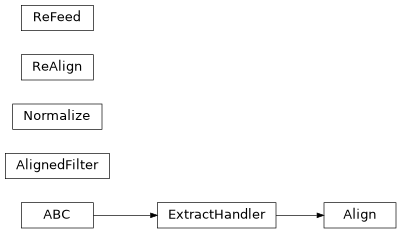
Class Inheritance Diagram
lib.infer.detect Module
Handles face detection plugins and runners
- class lib.infer.detect.Detect(plugin: str, rotation: str | None = None, min_size: int = 0, max_size: int = 0, compile_model: bool = False, config_file: str | None = None)
Responsible for handling Detection plugins within the extract pipeline
- Parameters:
plugin (str) – The plugin that this runner is to use
None (rotation |) – The rotation arguments. Either a list of angles between 0 and 360 to rotate at or a single step size. Default:
None, no rotationsmin_size (int) – Minimum percentage of the frame’s shortest edge to accept as a successful detection along the detection’s longest edge Default: 0 (accept all detections)
max_size (int) – Maximum percentage of the frame’s shortest edge to accept as a successful detection along the detection’s longest edge Default: 0 (accept all detections)
compile_model (bool) –
Trueto compile any PyTorch modelsconfig_file (str | None) – Full path to a custom config file to load.
Nonefor default configrotation (str | None)
- output_info() None
Output the counts of filtered items
- Return type:
None
- post_process(batch: ExtractBatch) None
Perform detection post processing.
If no rotations were requested, any plugin post-processing will be done here.
- Detection boxes are:
stacked into a single array
scaled back to frame dimensions,
filtered for faces which fall outside min/max thresholds
Added to the batch object along with frame to face mapping information.
- Parameters:
batch (ExtractBatch) – The incoming ExtractBatch to use for post-processing
- Return type:
None
- pre_process(batch: ExtractBatch) None
Perform pre-processing for detection plugins.
Gets the scale and padding to take the batch of images to model input size
Formats the image to the correct color order, dtype and scale for the plugin
Performs any plugin specific pre-processing
- Parameters:
batch (ExtractBatch) – The incoming ExtractBatch to use for pre-processing
- Return type:
None
- process(batch: ExtractBatch) None
Obtain the output from the plugin’s model.
Executes the plugin’s predict function and stores the output prior to post-processing.
If rotations have been selected, plugin post-processing is done as part of this process as the computed bounding boxes are required for re-feeding the model future rotations
- Parameters:
batch (ExtractBatch) – The incoming ExtractBatch to use for processing
- Return type:
None
- class lib.infer.detect.Rotator(angles: str | None, image_size: int)
Handles pre-calculation of rotation matrices when rotation angles are requested and rotating images for feeding the detector. Handles reversing the rotation for any found detection bounding boxes.
- Parameters:
rotation – List of requested rotation angles in degrees provided in command line arguments
image_size (int) – The size of the square image to obtain rotation matrices for
angles (str | None)
- enabled
Trueif rotations are to be performed
- rotate(rotation_index: int, images: ndarray) ndarray | None
Rotate a batch of images by the matrix provided by the given rotation index. Attempts to detect and handle channels first images as well as channels last
- Parameters:
rotation_index (int) – The matrix to use. This will be an incrementing index from an enumerated loop that selects through the matrices stored for each angle
images (ndarray) – The original, correctly orientated, batch of images to rotate
- Returns:
The batch of image rotated by the angle identified by the given rotation index.
Noneif the given rotation index is invalid
- Return type:
ndarray | None
- un_rotate(indices_angle: npt.NDArray[np.int32], roi: npt.NDArray[np.float32]) None
Un-rotate the given bounding boxes for the given angle indices and update in place
- Parameters:
indices_angle (npt.NDArray[np.int32]) – The angle indices that correlate to the angle each roi was rotated to to obtain the result
roi (npt.NDArray[np.float32]) – Ragged array of (B, N, 4) detected bounding discovered at the corresponding angle index
- Return type:
None
Classes
|
Responsible for handling Detection plugins within the extract pipeline |
|
Handles pre-calculation of rotation matrices when rotation angles are requested and rotating images for feeding the detector. |
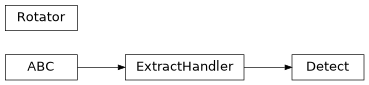
Class Inheritance Diagram
lib.infer.handler Module
Handles individual plugins within a plugin runner
- class lib.infer.handler.ExtractHandler(plugin: str, compile_model: bool = False, config_file: str | None = None)
Handles the execution of a plugin’s pre_process, process and post_process actions
- Parameters:
plugin (str) – The name of the plugin that this handler is to use
compile_model (bool) –
Trueto compile any PyTorch modelsconfig_file (str | None) – Full path to a custom config file to load.
Nonefor default config
- __call__(input_plugin: ExtractHandler | ExtractRunner | None = None, profile: bool = False) ExtractRunner
Build and start the plugin handler’s runner
- Parameters:
input_plugin (ExtractHandler | ExtractRunner | None) – The input plugin handler or it’s runner that feeds this handler.
Noneif data is to be fed through the handler runner’s put method (ie, the first handler in an extraction chain). Default:Noneprofile (bool) –
Trueif the runner is to be profiled, indicating that threads will not be started. Default:False
- Return type:
The extract plugin handler’s runner for this handler
- property batch_size: int
The batch size of the plugin
- do_compile
Trueif any managed Torch modules are to be compiled
- init_model() None
Load the model, compile it, if requested, and send a warmup batch through. Called either from the main thread, if compiling, or from the inference thread if not.
- Return type:
None
- output_info() None
Called after the final item is put to the out queue. Override for plugin runner specific output
- Return type:
None
- plugin
The extraction plugin that this handler manages
- plugin_name
The name of the plugin that is being handled
- plugin_type: Literal['detect', 'align', 'mask', 'identity', 'file']
The type of plugin that this handler manages
- abstractmethod post_process(batch: ExtractBatch) None
Perform post-processing on the given batch object, ready for exit from the plugin. Override for plugin type specific behavior
- Parameters:
batch (ExtractBatch) – The incoming ExtractBatch to use for post-processing
- Return type:
None
- abstractmethod pre_process(batch: ExtractBatch) None
Override to perform plugin type specific behavior for pre-processing on the given batch object, ready for inference.
- Parameters:
batch (ExtractBatch) – The incoming ExtractBatch to use for pre-processing
- Return type:
None
- abstractmethod process(batch: ExtractBatch) None
Override to plugin type specific processing to get results from the plugin’s inference for the given batch.
- Parameters:
batch (ExtractBatch) – The incoming ExtractBatch to use for processing
- Return type:
None
- processors: tuple[Literal['pre_process', 'process', 'post_process'], ...] = ('pre_process', 'process', 'post_process')
The processors which should have thread’s launched for this handler
- property runner: ExtractRunner
The runner that runs this handler
- class lib.infer.handler.ExtractHandlerFace(plugin: str, compile_model: bool = False, config_file: str | None = None)
Handles an extract plugin. Extended with methods common to plugins that use aligned face images as input
- Parameters:
plugin (FacePlugin) – The name of the plugin that this runner is to use
compile_model (bool) –
Trueto compile any PyTorch modelsconfig_file (str | None) – Full path to a custom config file to load.
Nonefor default config
- plugin: FacePlugin
The extraction plugin that this handler manages
- process(batch: ExtractBatch) None
Perform inference to get results from the plugin for the given batch. Override for plugin type specific processing
- Parameters:
batch (ExtractBatch) – The incoming ExtractBatch to use for processing
- Return type:
None
- storage_name
The name that the object will be stored with in the alignments file
- class lib.infer.handler.FileHandler
A pseudo handler that passes through data when the pipeline is driven entirely by an alignments file (ie: no plugins are being loaded). This is effectively a No-op which allows the data to pass straight from input to output
- class Plugin
Dummy plugin with required properties
- __call__(input_plugin: ExtractHandler | ExtractRunner | None = None, profile: bool = False) ExtractRunner
Build and start the plugin handler’s runner. Overridden to ensure that neither an input plugin or profile are set
- Parameters:
input_plugin (ExtractHandler | ExtractRunner | None) – The input plugin handler or it’s runner that feeds this handler.
Noneif data is to be fed through the handler runner’s put method (ie, the first handler in an extraction chain). Must beNonefor file handlerprofile (bool) –
Trueif the runner is to be profiled, indicating that threads will not be started. Must beFalsefor file handler
- Return type:
The extract plugin handler’s runner for this handler
- post_process(batch: ExtractBatch) None
Not applicable for passthrough plugin.
- Parameters:
batch (ExtractBatch)
- Return type:
None
- pre_process(batch: ExtractBatch) None
Not applicable for passthrough plugin.
- Parameters:
batch (ExtractBatch)
- Return type:
None
- process(batch: ExtractBatch) None
Not applicable for passthrough plugin.
- Parameters:
batch (ExtractBatch)
- Return type:
None
- processors: tuple[Literal['pre_process', 'process', 'post_process'], ...] = ()
File handler launches no threads
Classes
|
Handles the execution of a plugin's pre_process, process and post_process actions |
|
Handles an extract plugin. |
|
Base extract plugin that all plugins must inherit from. |
|
Runs an extract plugin |
|
Faceswap Error for handling specific errors with useful information. |
A pseudo handler that passes through data when the pipeline is driven entirely by an alignments file (ie: no plugins are being loaded). |
|
|
Enumeration for the landmark types that Faceswap supports |
|
Exception raised when device is out of memory |
|
Retrieve, or get information on, Faceswap plugins |
Variables
dict() -> new empty dictionary dict(mapping) -> new dictionary initialized from a mapping object's (key, value) pairs dict(iterable) -> new dictionary initialized as if via: d = {} for k, v in iterable: d[k] = v dict(**kwargs) -> new dictionary initialized with the name=value pairs in the keyword argument list. For example: dict(one=1, two=2). |
|
str(object='') -> str str(bytes_or_buffer[, encoding[, errors]]) -> str |
|
A standard |
Class Inheritance Diagram

lib.infer.identity Module
Handles face identity plugins and runners
- class lib.infer.identity.Cluster(predictions: ndarray, method: Literal['single', 'centroid', 'median', 'ward'], threshold: float | None = None)
Cluster the outputs from a VGG-Face 2 Model
- Parameters:
predictions (np.ndarray) – A stacked matrix of identity predictions of the shape (N, D) where N is the number of observations and D are the number of dimensions. NB: The given
predictionswill be overwritten to save memory. If you still require the original values you should take a copy prior to running this methodmethod (T.Literal['single', 'centroid', 'median', 'ward']) – The clustering method to use.
threshold (float | None) – The threshold to start creating bins for. Set to
Noneto disable binning
- __call__() list[tuple[int, int]]
Process the linkages.
Transforms a distance matrix into a sorted distance matrix according to the order implied by the hierarchical tree (dendrogram).
- Returns:
List of indices with the order implied by the hierarchical tree or list of tuples of
(index, bin) if a binning threshold was provided
- Return type:
list[tuple[int, int]]
- class lib.infer.identity.FilterLoader(threshold: float, filter_files: list[str] | None, nfilter_files: list[str] | None)
Obtains face embeddings from images and loads the IdentityFilter as part of the extraction pipeline
- Parameters:
threshold (float) – The threshold value for filtering out items. Default: 0.4
filter_files (list[str] | None) – The list of full paths to the files to use for filtering. Default:
None(don’t use filter)nfilter_files (list[str] | None) – The list of full paths to the files to use to nfilter. Default:
None(don’t use nfilter)
- add_identity_plugin(runner: ExtractRunner) None
Add the identity plugin for updating with embedding information
- Parameters:
runner (ExtractRunner) – The identity runner for the pipeline
- Return type:
None
- enabled
Trueif identity face filtering is enabled
- get_embeddings(pipeline: ExtractRunner) None
Obtain the embeddings that are to be used for face filtering and add to the identity plugin
- Parameters:
pipeline (ExtractRunner) – The extraction pipelines for obtaining embeddings from non-faceswap images
- Return type:
None
- threshold
The threshold value for filtering out items
- class lib.infer.identity.Identity(plugin: str, threshold: float = 0.4, compile_model: bool = False, config_file: str | None = None)
Responsible for handling Identity/Recognition plugins within the extract pipeline
- Parameters:
plugin (str) – The plugin that this runner is to use
filter_threshold – The threshold to use when filtering faces by identity. Default: 0.4
compile_model (bool) –
Trueto compile any PyTorch modelsconfig_file (str | None) – Full path to a custom config file to load.
Nonefor default configthreshold (float)
- add_filter_identities(identities: npt.NDArray[np.float32], is_filter: bool) None
Add the given identities to the identity filter
- Parameters:
identities (npt.NDArray[np.float32]) – The identity embeddings to add to the filter
is_filter (bool) –
Truefor filter,Falsefor nFilter
- Return type:
None
- output_info() None
Output the counts from the identity filter
- Return type:
None
- post_process(batch: ExtractBatch) None
Perform recognition post processing.
Obtains the final output from the identity plugin and performs any plugin specific post- processing
- Parameters:
batch (ExtractBatch) – The incoming ExtractBatch to use for post-processing
- Return type:
None
- pre_process(batch: ExtractBatch) None
Obtain the aligned face images at the requested size, centering and image format. Perform any plugin specific pre-processing
- Parameters:
batch (ExtractBatch) – The incoming ExtractBatch to use for pre-processing
- Return type:
None
- class lib.infer.identity.IdentityFilter(threshold: float, name: str)
Handles filtering of faces based on provided image files
- Parameters:
threshold (float) – The threshold value for filtering out items
name (str) – The name of the identity plugin running
- __call__(batch: ExtractBatch) None
Apply the identity filter to the given batch
- Parameters:
batch (ExtractBatch) – The batch object to perform filtering on with the identities populated
- Return type:
None
- add_identities(identities: npt.NDArray[np.float32], is_filter: bool) None
Add the given identities to the filter
- Parameters:
identities (npt.NDArray[np.float32]) – The identity embeddings to add to the filter
is_filter (bool) –
Truefor filter,Falsefor nFilter
- Return type:
None
- enabled
Trueif the identity filter is enabled
- output_counts() None
If filter is enabled info log the number of faces filtered
- Return type:
None
- threshold
The threshold for accepting a filter result
Classes
|
Cluster the outputs from a VGG-Face 2 Model |
|
Obtains face embeddings from images and loads the IdentityFilter as part of the extraction pipeline |
|
Responsible for handling Identity/Recognition plugins within the extract pipeline |
|
Handles filtering of faces based on provided image files |
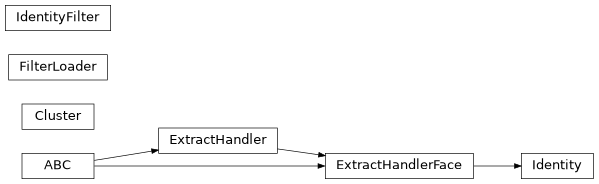
Class Inheritance Diagram
lib.infer.iterator Module
Iterators for ingesting into and passing data through extract plugin runners
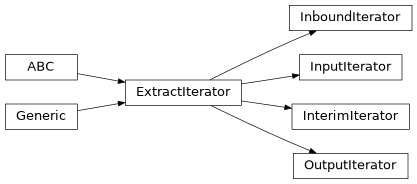
- class lib.infer.iterator.ExtractIterator(queue: Queue[QueueItemInT | ExtractSignal], name: str, plugin_type: T.Literal['detect', 'align', 'mask', 'identity', 'file'], batch_size: int, error_state: ErrorState)
Base class for iterators within Faceswap’s extract pipeline
Type Parameters
- QueueItemInT
Type of item received from the input queue.
- QueueItemOutT
Type yielded by the iterator.
- param queue:
The inbound queue to the plugin
- param name:
The plugin name and process calling this iterator
- param plugin_type:
The type of extractor plugin that this iterator is serving
- param batch_size:
The batch size that data should be returned from the iterator
- param error_state:
The pipeline threads’ global Error State object
- abstractmethod __next__() QueueItemOutT | ExtractSignal
Override to return the next batch item from the iterator
- Returns:
Batch object for pipeline processing, or a final media object when exiting the pipeline.
- Return type:
- Parameters:
queue (Queue[QueueItemInT | ExtractSignal])
name (str)
plugin_type (T.Literal['detect', 'align', 'mask', 'identity', 'file'])
batch_size (int)
error_state (ErrorState)
- class lib.infer.iterator.InboundIterator(queue: Queue[QueueItemInT | ExtractSignal], name: str, plugin_type: T.Literal['detect', 'align', 'mask', 'identity', 'file'], batch_size: int, error_state: ErrorState)
An iterator that processes ExtractBatch data from a previous plugin and configures it as an input for the current plugin.
An Inbound iterator assumes that the plugin’s batch size are the number of faces (not frames) that it can process at one time. Detect plugins are the only plugins that work with frames rather than faces, but these will always be the input to the pipeline, so will use an InputIterator not an InboundIterator
- Parameters:
queue (Queue[QueueItemInT | ExtractSignal]) – The outbound queue from the previous plugin
name (str) – The plugin name and process calling this iterator
plugin_type (T.Literal['detect', 'align', 'mask', 'identity', 'file']) – The type of extractor plugin that this iterator is serving
batch_size (int) – The batch size that data should be returned from the iterator
error_state (ErrorState)
- __next__() ExtractBatch | ExtractSignal
Get the next batch of data from the iterator. Depending on the plugin type calling this iterator, a batch object will be returned for the given batch size of frames (for detect plugins) or faces (for all other plugins)
- Returns:
A new ExtractBatch object containing the batch to process through the plugin or an ExtractSignal
- Return type:
- Raises:
StopIteration – When the input is exhausted
- class lib.infer.iterator.InputIterator(queue: Queue[QueueItemInT | ExtractSignal], name: str, plugin_type: T.Literal['detect', 'align', 'mask', 'identity', 'file'], batch_size: int, error_state: ErrorState)
An iterator that processes FrameFaces data that is input to a plugin pipeline to create ExtractBatch objects at the correct batch size for processing through the pipeline’s first plugin
- Parameters:
queue (Queue[QueueItemInT | ExtractSignal]) – The inbound queue to the plugin pipeline
name (str) – The plugin name and process calling this iterator
plugin_type (T.Literal['detect', 'align', 'mask', 'identity', 'file']) – The type of extractor plugin that this iterator is serving
batch_size (int) – The batch size that data should be returned from the iterator
error_state (ErrorState)
- __next__() ExtractBatch | ExtractSignal
Get the next batch of data from the iterator. Depending on the plugin type calling this iterator, a batch object will be returned for the given batch size of frames (for detect plugins) or faces (for all other plugins)
- Returns:
A new Batch object containing the batch to process through the plugin or a signal
- Return type:
- Raises:
StopIteration – When the input is exhausted
- class lib.infer.iterator.InterimIterator(queue: Queue[QueueItemInT | ExtractSignal], name: str, plugin_type: T.Literal['detect', 'align', 'mask', 'identity', 'file'], batch_size: int, error_state: ErrorState)
An iterator that simply collects interim ExtractBatch objects from the given queue and yields them
- Parameters:
queue (Queue[QueueItemInT | ExtractSignal]) – The inbound queue to the plugin
name (str) – The plugin name and process calling this iterator
plugin_type (T.Literal['detect', 'align', 'mask', 'identity', 'file']) – The type of extractor plugin that this iterator is serving
batch_size (int) – The batch size that data should be returned from the iterator
error_state (ErrorState)
- __next__() ExtractBatch | ExtractSignal
Get the next batch of data from the iterator
- Returns:
The next available ExtractBatch object to process through the plugin or an ExtractSignal
- Return type:
- Raises:
StopIteration – When the input is exhausted
- class lib.infer.iterator.OutputIterator(queue: Queue[QueueItemInT | ExtractSignal], name: str, plugin_type: T.Literal['detect', 'align', 'mask', 'identity', 'file'], batch_size: int, error_state: ErrorState)
Handles parsing incoming ExtractBatch objects into FrameFaces objects and yielding one frame at a time from the pipeline
- Parameters:
queue (Queue[QueueItemInT | ExtractSignal]) – The output queue from the plugin runner
name (str) – The plugin name and process calling this iterator
plugin_type (T.Literal['detect', 'align', 'mask', 'identity', 'file']) – The type of extractor plugin that this iterator is serving
batch_size (int) – The batch size that data should be returned from the iterator
error_state (ErrorState)
- __next__() FrameFaces
Get the next batch of data from the iterator
- Return type:
A FrameFaces object for a single frame
- Raises:
StopIteration – When the input is exhausted
Classes
|
Base class for iterators within Faceswap's extract pipeline |
|
An iterator that processes ExtractBatch data from a previous plugin and configures it as an input for the current plugin. |
|
An iterator that processes FrameFaces data that is input to a plugin pipeline to create ExtractBatch objects at the correct batch size for processing through the pipeline's first plugin |
|
An iterator that simply collects interim ExtractBatch objects from the given queue and yields them |
|
Handles parsing incoming ExtractBatch objects into FrameFaces objects and yielding one frame at a time from the pipeline |
Variables
Type variable. |
|
Type variable. |
Class Inheritance Diagram
lib.infer.mask Module
Handles face masking plugins and runners
- class lib.infer.mask.Mask(plugin: str, compile_model: bool = False, config_file: str | None = None)
Responsible for running Masking plugins within the extract pipeline
- Parameters:
plugin (str) – The plugin that this runner is to use
compile_model (bool) –
Trueto compile any PyTorch modelsconfig_file (str | None) – Full path to a custom config file to load.
Nonefor default config
- post_process(batch: ExtractBatch) None
Perform mask post processing.
Obtains the final output from the mask plugins and masks any part of the face patch that goes out of bounds
- Parameters:
batch (ExtractBatch) – The incoming ExtractBatch to use for post-processing
- Return type:
None
- pre_process(batch: ExtractBatch) None
Obtain the aligned face images at the requested size, centering and image format. Perform any plugin specific pre-processing
- Parameters:
batch (ExtractBatch) – The incoming ExtractBatch to use for pre-processing
- Return type:
None
Classes
|
Responsible for running Masking plugins within the extract pipeline |
Class Inheritance Diagram

lib.infer.objects Module
Objects used for extraction plugins, runners and pipeline
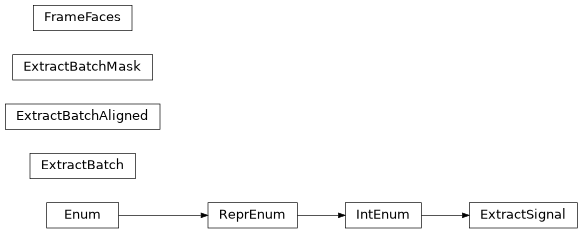
- class lib.infer.objects.ExtractBatch(filenames: list[str] = <factory>, images: list[np.ndarray] = <factory>, sources: list[str | None] = <factory>, is_aligned: bool = False, frame_sizes: list[tuple[int, int]] | None=None, frame_metadata: list[PNGSource] | None = None, passthrough: bool = False)
Dataclass for holding a batch flowing through Extraction plugins.
The batch size for post Detector plugins is not the same as the overall batch size. An image may contain 0 or more detected faces, and these need to be split and recombined to be able to utilize a plugin’s internal batch size.
- Parameters:
filenames (list[str]) – The original frame filenames for the batch
images (list[np.ndarray]) – The original frames
sources (list[str | None]) – The full path to the source folder or video file. Default:
[](Not provided)is_aligned (bool) –
Trueifimagescontains aligned faces.Falseif it contains full frames. Default:Falseframe_sizes (list[tuple[int, int]] | None) – The original frame (height, width) dimensions that contained the aligned images when
imagesare aligned faces. Default:Noneframe_metadata (list[PNGSource] | None) – The original frame meta data when aligned faces is
TrueotherwiseNonepassthrough (bool) – True` if the contents of this item are meant to pass straight through the extraction pipeline for immediate return
- aligned: ExtractBatchAligned = <dataclasses._MISSING_TYPE object>
Holds the face landmarks found for this batch any any aligned data
- append(batch: ExtractBatch) None
Append the data from the given batch object to this batch object
- Parameters:
batch (ExtractBatch) – The object containing data to be appended to this object
- Return type:
None
- apply_mask(mask: NDArray[bool]) None
Apply a boolean mask to the batch object.
Truevalues are kept,Falsevalues are discarded- Parameters:
mask (NDArray[bool]) – The boolean mask to apply to the object. Must be of size (num_boxes, )
- Return type:
None
- bboxes: npt.NDArray[np.int32] = <dataclasses._MISSING_TYPE object>
The bounding boxes found for this batch
- data: np.ndarray = <dataclasses._MISSING_TYPE object>
The data for this batch that has been populated by a processing step for ingestion by the next processing step. Internally populated. Cleared at the end of each plugin
- filenames: list[str] = <dataclasses._MISSING_TYPE object>
The original frame filenames
- frame_ids: npt.NDArray[np.int32] = <dataclasses._MISSING_TYPE object>
A mapping of each box to which frame they came from
- frame_metadata: list[PNGSource] | None = None
The original frame metadata when aligned faces is
TrueotherwiseNone
- frame_sizes: list[tuple[int, int]] | None = None
The original frame (heights, widths) when the images are aligned faces
- from_detected_faces(faces: list[DetectedFace]) None
Populate an ExtractBatch with the contents of a DetectedFace object.
- Parameters:
faces (list[DetectedFace]) – The DetectedFace objects to populate this batch
- Raises:
ValueError – If attempting to add detected faces without pre-populating filename and image or if bounding boxes pre-exist or if more than one frame is held in this batch
- Return type:
None
- classmethod from_frame_faces(media: FrameFaces) ExtractBatch
Populate a new ExtractBatch with the contents of an FrameFaces object.
- Parameters:
media (FrameFaces) – The FrameFaces to populate this batch from
- Return type:
A new ExtractBatch object populated from the given FrameFaces object
- identities: dict[str, npt.NDArray[np.float32]] = <dataclasses._MISSING_TYPE object>
The identity matrices for face recognition found for this batch
- images: list[np.ndarray] = <dataclasses._MISSING_TYPE object>
The original frames
- property landmark_type: LandmarkType | None
The landmark type found for this batch or
Noneif not populated
- property landmarks: NDArray[float32] | None
The face landmarks found for this batch in frame space or
Noneif not populated
- property lengths: NDArray[int32]
The number of bboxes that belong to each frame
- masks: dict[str, ExtractBatchMask] = <dataclasses._MISSING_TYPE object>
The masks for this batch
- matrices: npt.NDArray[np.float32] = <dataclasses._MISSING_TYPE object>
Transformation matrices for taking points from model input space to frame space. Cleared at the end of each plugin
- passthrough: bool = False
Whether this item should pass straight through the pipeline for immediate return
- sources: list[str | None] = <dataclasses._MISSING_TYPE object>
The full paths to the source folder or video file.
Noneif not provided
- class lib.infer.objects.ExtractBatchAligned(landmarks: NDArray[float32] | None = None, landmark_type: LandmarkType | None = None)
Dataclass for working with batches of aligned images
- Parameters:
landmarks (numpy._typing._array_like.NDArray[numpy.float32] | None) – The face landmarks found for this batch in frame space or
Noneif not available. Default:None(to be populated later)landmark_type (lib.align.constants.LandmarkType | None) – The type of landmarks that the batch holds or
Noneif not available. Default:None(to be populated later)
- append(batch: ExtractBatchAligned) None
Append the data from the given batch object to this batch object
- Parameters:
batch (ExtractBatchAligned) – The object containing data to be appended to this object
- Return type:
None
- apply_mask(mask: NDArray[bool]) None
Apply a boolean mask to the batch object.
Truevalues are kept,Falsevalues are discarded- Parameters:
mask (NDArray[bool]) – The boolean mask to apply to the object. Must be of size (landmarks, )
- Return type:
None
- landmark_type: LandmarkType | None = None
The type of landmarks that the batch holds
- landmarks: NDArray[float32] | None = None
The face landmarks found for this batch in frame space or
Noneif not populated
- property landmarks_68: NDArray[float32]
The stored landmarks as 68 point landmarks if supported, or original landmarks if not ( 4 point ROI landmarks)
- property landmarks_normalized: NDArray[float32]
The normalized, aligned 68 point landmarks
- property matrices: NDArray[float32]
The face alignment matrices to transform from frame space to normalized (0, 1) space
- property matrices_face: NDArray[float32]
The alignment matrices to transform from normalized legacy space (0, 1) to normalized face space
- property matrices_head: NDArray[float32]
The alignment matrices to transform from normalized legacy space (0, 1) to normalized head space
- property offsets_face: NDArray[float32]
The (N, x, y) offsets required to shift from normalized (legacy) centering to face centering
- property offsets_head: NDArray[float32]
The (N, x, y) offsets required to shift from normalized (legacy) centering to head centering
- property offsets_legacy: NDArray[float32]
The (N, x, y) offsets for normalized (legacy) centering. This is always (0, 0) for all items in the batch
- property rotation: NDArray[float32]
The estimated (N, 3, 1) rotation vectors
- property translation: NDArray[float32]
The estimated (N, 3, 1) translation vectors
- class lib.infer.objects.ExtractBatchMask(centering: CenteringType, matrices: npt.NDArray[np.float32], storage_size: int = 0, masks: npt.NDArray[np.uint8] = <factory>)
Dataclass for holding information about masks produced by the extraction pipeline
- Parameters:
centering (CenteringType) – The centering type of the masks
matrices (npt.NDArray[np.float32]) – The normalized matrices required to take the masks from (0, 1) to full frame
storage_size (int) – The pixel size to store the mask at in the alignments file. Default: 0 (must be populated later)
masks (npt.NDArray[np.uint8]) – The masks for this batch. Default: empty array (must be populated later)
- append(mask_batch: ExtractBatchMask) None
Append the given mask batch object to this batch mask object
- Parameters:
mask_batch (ExtractBatchMask) – The object containing data to be appended to this object
- Return type:
None
- apply_mask(mask: NDArray[bool]) None
Apply a boolean mask to the batch object.
Truevalues are kept,Falsevalues are discarded- Parameters:
mask (NDArray[bool]) – The boolean mask to apply to the object. Must be of size (num_masks, )
- Return type:
None
- centering: CenteringType = <dataclasses._MISSING_TYPE object>
The centering type of the masks
- masks: npt.NDArray[np.uint8] = <dataclasses._MISSING_TYPE object>
The masks for this batch
- matrices: npt.NDArray[np.float32] = <dataclasses._MISSING_TYPE object>
The normalized matrices required to take the masks from (0, 1) to full frame
- storage_size: int = 0
The pixel size to store the mask at in the alignments file
- class lib.infer.objects.ExtractSignal(*values)
Signals to send to the extraction pipeline
- FLUSH = 1
Flush all queued items
- SHUTDOWN = 2
Flush all queued items and shutdown
- class lib.infer.objects.FrameFaces(filename: str, image: npt.NDArray[np.uint8], bboxes: npt.NDArray[np.int32] | None = None, landmarks: npt.NDArray[np.float32] | None = None, identities: dict[str, npt.NDArray[np.float32]] | None = None, masks: dict[str, ExtractBatchMask] | None = None, source: str | None = None, is_aligned: bool = False, frame_metadata: PNGSource | None = None, passthrough: bool = False)
An object for holding information about faces in a single frame
- Parameters:
filename (str) – The original file name of the frame
image (npt.NDArray[np.uint8]) – The original frame or a faceswap aligned face image
bboxes (npt.NDArray[np.int32] | None) – The (N, Left, Top, Right, Bottom) bounding boxes of the faces in the frame. Default:
None(Not provided)landmarks (npt.NDArray[np.float32] | None) – The (N, M, 2) landmarks for each face in the frame, in frame space. Default:
None(Not provided)identities (dict[str, npt.NDArray[np.float32]] | None) – The identity matrices for each face in the frame. Default:
None(Not provided)masks (dict[str, ExtractBatchMask] | None) – The mask objects for each face in the frame. Default:
None(Not provided)source (str | None) – The full path to the source folder or video file. Default:
None(Not provided)is_aligned (bool) –
Trueif theimageis an aligned faceswap image otherwiseFalse. Used for face filtering with vggface2. Aligned faceswap images will automatically skip detection, alignment and masking. Default:Falseframe_metadata (PNGSource | None) – The frame metadata for aligned images.
Noneif the image is not an aligned imagepassthrough (bool) –
Trueif this item is meant to be passed straight through the extraction pipeline with no batching or caching. for immediate return. Default:False
- aligned
Holds the face landmarks found for this batch any any aligned data
- append(batch: FrameFaces) None
Append the data from the given batch object to this batch object
- Parameters:
batch (FrameFaces) – The object containing data to be appended to this object
- Return type:
None
- bboxes
The (N, Left, Top, Right, Bottom) bounding boxes of the faces in the frame
- property detected_faces: list[DetectedFace]
A list of DetectedFace objects within the
image
- filename
The original file name of the original frame
- frame_metadata: PNGSource | None
The frame metadata that has been added from an aligned image.
Noneif metadata has not been added
- identities
The identity matrices for each face in the frame
- image
The original frame or a faceswap aligned face image
- image_shape
The shape of the original frame
- property landmarks: NDArray[float32] | None
The (N, M, 2) landmarks for each face in the frame, in frame space
- masks
The mask objects for each face in the frame
- passthrough
Trueif the contents of this item are meant to pass straight through the extraction pipeline for immediate return
- source
The full path to the source folder or video file or
Noneif not provided
- lib.infer.objects.frame_faces_to_alignment(media: FrameFaces) list[PNGAlignments]
Convert the faces in a FrameFaces object into a list of dictionaries (one for each face) for serializing into image headers and alignments files
- Parameters:
media (FrameFaces)
- Return type:
list[PNGAlignments]
Functions
|
Convert the faces in a FrameFaces object into a list of dictionaries (one for each face) for serializing into image headers and alignments files |
Classes
|
Dataclass for holding a batch flowing through Extraction plugins. |
|
Dataclass for working with batches of aligned images |
|
Dataclass for holding information about masks produced by the extraction pipeline |
|
Signals to send to the extraction pipeline |
|
An object for holding information about faces in a single frame |
Class Inheritance Diagram
lib.infer.plugin_utils Module
General utility functions for Faceswap inference
- lib.infer.plugin_utils.compile_models(plugin: ExtractPlugin, modules: list[torch.nn.Module]) None
Compile any Torch modules in the plugin’s model attribute
- Parameters:
plugin (ExtractPlugin) – The plugin containing Torch modules to be compiled
modules (list[torch.nn.Module]) – The list of Torch modules contained within the plugin’s model attribute
- Return type:
None
- lib.infer.plugin_utils.get_torch_modules(obj: Any, mod: str | None = None, seen: set[int] | None = None, results: list[Module] | None = None) list[Module]
Recursively search a plugin’s model attribute to find any parent :class:`torch.nn.Module`s
- Parameters:
obj (Any) – The object to check if it is a torch Module. This should be a plugin’s model attribute
mod (str | None) – The module that the parent model class belongs to. Default:
None(Collected from the first object entered into the recursive function)seen (set[int] | None) – A set of seen object IDs to prevent self-recursion. Default:
None(Created when the first object enters the recursive function)results (list[Module] | None) – List of discovered torch modules. Default:
None(Created when the first object enters the recursive function)
- Return type:
The list of discovered torch Modules
- lib.infer.plugin_utils.random_input_from_plugin(plugin: ExtractPlugin, batch_size: int, channels_last: bool) np.ndarray
Obtain a random input array from a plugin’s information for the given batch size
- Parameters:
plugin (ExtractPlugin) – The plugin to obtain the input array for
batch_size (int) – The batch size for the input array
channels_last (bool) –
Trueif the data should be formatted channels last
- Return type:
A random input array in the correct format for the given plugin at the given batch size
- lib.infer.plugin_utils.warmup_plugin(plugin: ExtractPlugin, batch_size: int, channels_last: bool | None = None) bool | None
Warm up a plugin that contains torch modules. If channels_last is
Nonethen attempt to send a channels first batch through. If it fails, send a channels last batch through- Parameters:
plugin (ExtractPlugin) – The plugin to warmup
batch_size (int) – The batch size to put through the model
channels_last (bool | None) – The expected channel order of the plugin or
Noneto detect
- Returns:
Trueif the plugin is detected as channels last,Falsefor channels first,Nonefor could not be detected- Return type:
bool
Functions
|
Compile any Torch modules in the plugin's model attribute |
|
Recursively search a plugin's model attribute to find any parent :class:`torch.nn.Module`s |
|
Obtain a random input array from a plugin's information for the given batch size |
|
Warm up a plugin that contains torch modules. |
lib.infer.profile Module
GPU profiling for throughput optimization
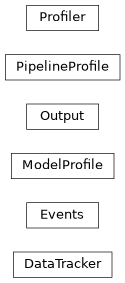
- class lib.infer.profile.DataTracker(size: dataclasses.InitVar[int], max_vram: dataclasses.InitVar[float], face_scaling: int, has_detector: bool)
Stores data from the benchmarking process
- Parameters:
size (InitVar[int]) – The number of plugins that data is being tracked for
face_scaling (int) – The amount of scaling to apply to downstream non-detection plugins
has_detector (bool) –
Trueif the first plugin in the pipeline is a detectormax_vram (InitVar[float]) – The maximum amount of total VRAM to allow Cuda to reserve when profiling
- add_iterations_row() None
Add a new row to the iterations list
- Return type:
None
- add_next_batch_sizes() None
Add the next batch size configuration to the batch size array based on the output from the last test
- Return type:
None
- property batch_sizes: npt.NDArray[np.int64]
All batch size combinations that did not OOM
- collect_vram() None
Store the currently allocated and reserved Cuda VRAM stats
- Return type:
None
- combos_exhausted: bool = False
Trueif we have run out of possible combinations to attempt
- get_samples(index: int | None = None, adjusted: bool = False) npt.NDArray[np.float64]
Obtain the number of sample processed by each plugin for a certain valid batch size combination
- Parameters:
index (int | None) – The testing index to obtain the samples for or
Nonefor all testsadjusted (bool) –
Trueto obtain results adjusted for any non-detector scaling. Default:False
- Return type:
The number of samples processed by each plugin
- get_samples_stats(method: T.Literal['mean', 'min'], index: int | None = None, adjusted: bool = False) npt.NDArray[np.float64]
Obtain the average or minimum samples processed for all plugins for a certain batch size combination
- Parameters:
method (T.Literal['mean', 'min']) –
meanto obtain the mean number of samples for all plugins.minto obtain the minimum number of samples processed by a pluginindex (int | None) – The testing index to obtain the average samples for or
Nonefor all tests. Default:Noneadjusted (bool) –
Trueto obtain results adjusted for any non-detector scaling. Default:False
- Return type:
The average number of samples processed by all plugins
- property has_oom: bool
Trueif the last iteration hit an OOM or fell outside our max VRAM threshold
- update_iterations(iterations: int, matrix_id: int) None
Update the iteration count from a plugin runner in a thread-safe way
- Parameters:
iterations (int) – The iteration count for the plugin
matrix_id (int) – The column id that belongs to the plugin
- Return type:
None
- vram: list[tuple[int, int]] = <dataclasses._MISSING_TYPE object>
list of (max allocated, max reserved) VRAM for each testing phase
- vram_limit: float = <dataclasses._MISSING_TYPE object>
The limit that Cuda reserved memory must remain within
- class lib.infer.profile.Events(ready: list[Event])
Holds thread events for communicating between main thread and plugins during benchmarking
- Parameters:
ready (list[threading.Event]) – List of events for each plugin in the pipeline to be tested
- set_ready(index: int)
Set the ready event for the given index
- Parameters:
index (int) – The index of the ready event to set
- wait_ready() None
Wait for all ready events to set their ready flag and clear the flag
- Return type:
None
- class lib.infer.profile.ModelProfile(plugin: ExtractPlugin, max_batch_size: int = 128, channels_last: bool = False, run_time: int = 10)
Benchmark a single PyTorch GPU plugin for inference
- Parameters:
plugin (ExtractPlugin) – The plugin to benchmark for inference
max_batch_size (int) – The maximum batch size to benchmark to
channels_last (bool) –
Trueif the input to the plugin is channels lastrun_time (int) – The amount of time, in seconds, to benchmark the plugin at each batch size
- __call__() None
Runs benchmarking through the plugin, stores the data and outputs stats
- Return type:
None
- channels_last
True if the plugin expects channels last input
- property run_time: int
The amount of time, in seconds, that benchmarks were ran per batch
- class lib.infer.profile.Output(plugin_names: list[str], data: DataTracker, run_time: int)
Handles outputting of information at each test step
- Parameters:
plugin_names (list[str]) – The list of plugin names in the order that they are executed
data (DataTracker) – The DataTracker object that collects stats
run_time (int) – The amount of time, in seconds, that each test is run
- __call__()
Output the latest test stats
- class lib.infer.profile.PipelineProfile(plugins: list[ExtractPlugin], error_state: ErrorState, channels_last: list[bool], warmup_time: int, run_time: int, has_detector: bool, face_scaling: int = 2, max_vram: int = 90)
Benchmark multiple PyTorch GPU plugins running simultaneously for inference
- Parameters:
plugins (list[ExtractPlugin]) – The plugins to benchmark for inference
error_state (ErrorState) – The global FSThread error state object for the pipeline
channels_last (list[bool]) – List indicating whether each model is channels first or last
warmup_time (int) – The amount of time, in seconds, to warmup the plugin at each batch size
run_time (int) – The amount of time, in seconds, to benchmark the plugin at each batch size
has_detector (bool) –
Trueif the first plugin in the pipeline is a detectorface_scaling (int) – The amount of scaling to apply to downstream plugins (ie estimate of average number of faces per frame). Default: 2
max_vram (int) – The maximum percentage of total VRAM to allow Cuda to reserve when profiling, Default: 90
- __call__() None
Runs benchmarking through all plugins concurrently, store the data and output stats
- Return type:
None
- class lib.infer.profile.Profiler(runner: ExtractRunner)
Profiles plugins within a pipeline
- Parameters:
runner (ExtractRunner) – The output runner from an extract pipeline that is to be profiled
- __call__() None
Call the profiler
- Return type:
None
Classes
|
Stores data from the benchmarking process |
|
Holds thread events for communicating between main thread and plugins during benchmarking |
|
Benchmark a single PyTorch GPU plugin for inference |
|
Handles outputting of information at each test step |
|
Benchmark multiple PyTorch GPU plugins running simultaneously for inference |
|
Profiles plugins within a pipeline |
Class Inheritance Diagram
lib.infer.runner Module
Handles extract plugins and runners
- class lib.infer.runner.ExtractRunner(handler: HandlerT)
Runs an extract plugin
- Parameters:
handler (HandlerT) – The plugin handler that this runner will execute
- __call__(input_runner: ExtractRunner | None, profile: bool) None
Build and start the plugin runner
- Parameters:
input_runner (ExtractRunner | None) – The input plugin that feeds this plugin or
Noneif data is to be fed through the runner’s put method.profile (bool) –
Trueif the runner is to be profiled, indicating that threads will not be started
- Raises:
ValueError – If the input runner has not been called and assigned a UUID or if this runner has already been called
- Return type:
None
- __next__() FrameFaces
Obtain the next item from the plugin’s output
- Return type:
The media object with populated detected faces for a frame
- flush() None
Flush all data currently within the pipeline
- Return type:
None
- property out_queue: Queue[ExtractBatch]
The output queue from this plugin runner
- put(filename: str, image: NDArray[uint8], detected_faces: list[DetectedFace] | None = None, source: str | None = None, is_aligned: bool = False, frame_metadata: PNGSource | None = None, passthrough: Literal[False] = False) None
- put(filename: str, image: NDArray[uint8], detected_faces: list[DetectedFace] | None = None, source: str | None = None, is_aligned: bool = False, frame_metadata: PNGSource | None = None, *, passthrough: Literal[True]) FrameFaces
Put a frame into the pipeline.
Note
When a pipeline is built using the __call__ method, this method will always put items into the first plugin in the pipeline
- Parameters:
filename (str) – The filename of the frame
image (npt.NDArray[np.uint8]) – The loaded frame as UINT8 BGR array
detected_faces (list[DetectedFace] | None) – The detected face objects for the frame.
Noneif not any. Default:Nonesource (str | None) – The full path to the source folder or video file. Default:
None(Not provided)is_aligned (bool) –
Trueif the image being passed into the pipeline is an aligned faceswap face. Default:Falseframe_metadata (PNGSource | None) – If the image is aligned then the original frame metadata can be added here. Some plugins (eg: mask) require this to be populated for aligned inputs. Default:
Nonepassthrough (bool) –
Trueif this item is meant to be passed straight through the extraction pipeline with no caching, for immediate return. Default:False
- Return type:
If passthrough is
Truereturns the output FrameFaces object, otherwiseNone
- put_direct(filename: str, image: npt.NDArray[np.uint8], detected_faces: list[DetectedFace], is_aligned: bool = False, frame_size: tuple[int, int] | None = None) ExtractBatch
Put an item directly into this runner’s plugin and return the result
- Parameters:
filename (str) – The filename of the frame
image (npt.NDArray[np.uint8]) – The loaded frame as UINT8 BGR array
detected_faces (list[DetectedFace]) – The detected face objects for the frame
is_aligned (bool) –
Trueif the image being passed into the pipeline is an aligned faceswap face. Default:Falseframe_size (tuple[int, int] | None) – The (height, width) size of the original frame if passing in an aligned image
- Raises:
ValueError – If attempting to put an ExtractBatch object to the first runner in the pipeline or if providing an aligned image with insufficient data
- Returns:
The output from this plugin for the given input
- Return type:
- put_media(media: FrameFaces) None | FrameFaces
Put a frame into the pipeline that is within a FrameFaces object.
Note
When a pipeline is built using the __call__ method, this method will always put items into the first plugin in the pipeline
- Parameters:
media (FrameFaces) – The FrameFaces object to put into the pipeline
- Returns:
If the FrameFaces’s passthrough is
Truereturns the output FrameFaces object,otherwise
None
- Return type:
None | FrameFaces
- register_external_error_state(state: ErrorState) None
Register an external error state object.
If we are not running any threads (specifically, file handler), the pipeline can hang the calling thread. The error state from the calling thread can be populated here. This can only be called if no threads have been registered for the runner
- Parameters:
state (ErrorState) – The ErrorState object to register
- Return type:
None
- start() None
Start the threads. Callback for when the profiler has finished executing
- Return type:
None
- stop() None
Indicate to the runner that there is no more data to be ingested
- Return type:
None
- property uuid: str
Unique identifier for plugin ordering and multi-plugin tracking
- class lib.infer.runner.PluginThreads(name: str)
Handles the holding of threads that will run a plugin’s various subprocesses.
- Parameters:
name (str) – The name of the plugin that the threads are being created for
- property enabled: list[str]
The thread names that have been registered within this group
- property error_state: ErrorState
The global FSThread error state object
- is_alive() bool
Test if any thread is alive
- Return type:
Trueif any thread is alive otherwise False
- join() None
Join all of the plugin’s threads
- Return type:
None
- register_external_error_state(state: ErrorState) None
Register an external error state object.
If we are not running any threads (specifically, file handler), the pipeline can hang the calling thread. The error state from the calling thread can be populated here. This can only be called if no threads have been registered
- Parameters:
state (ErrorState) – The ErrorState object to register
- Raises:
RuntimeError – If an ErrorState object is registered when this object already contains threads
- Return type:
None
- register_thread(name: str, target: Callable[[Literal['pre_process', 'process', 'post_process']], None]) None
Register a thread
- Parameters:
name (str) – The name of the plugin handler’s processor that is running in the thread
target (Callable[[Literal['pre_process', 'process', 'post_process']], None]) – The function to run within the thread
- Return type:
None
- start() None
Start the plugin’s threads
- Return type:
None
- lib.infer.runner.get_pipeline(runner: ExtractRunner) list[ExtractRunner]
Obtain a list of runners in order of input to output of the extraction chain that the given runner belongs to
- Parameters:
runner (ExtractRunner) – The initialized runner to obtain the full chain for
- Return type:
The ordered list of runners if the inference chain that the given runner belongs to
Functions
|
Obtain a list of runners in order of input to output of the extraction chain that the given runner belongs to |
Classes
|
Runs an extract plugin |
|
Handles the holding of threads that will run a plugin's various subprocesses. |
Variables
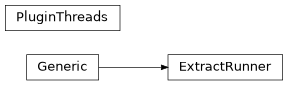
Type variable. |
Class Inheritance Diagram